Leland was a sub-brand of Chicago’s Lyon & Healy and, and in the 19teens and twenties, marketed the full line of mandolin family instruments, including both a piccolo mandolin and a bass mando. It is widely accepted that the Larson brothers manufactured the instruments.
Like the other major makers of the time, Leland debuted its “bass mando” at the 1912 guild convention and shortly thereafter began marketing it. They took a similar tack to Gibson in encouraging ensembles to form around the 7 part orchestra after the 7 part mandolin club out of Chicago.
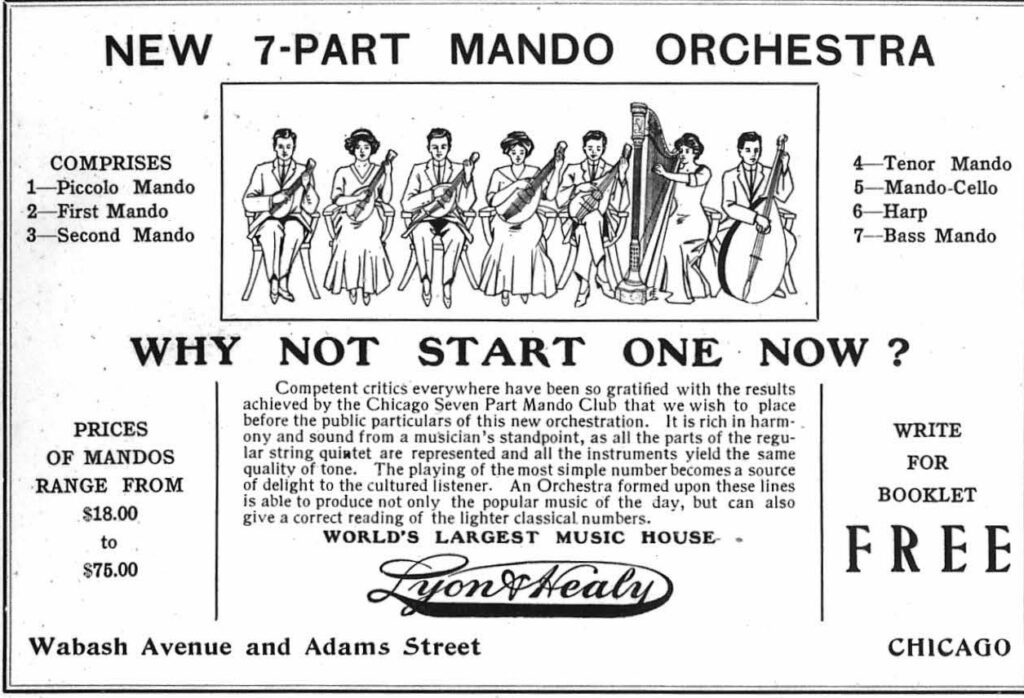
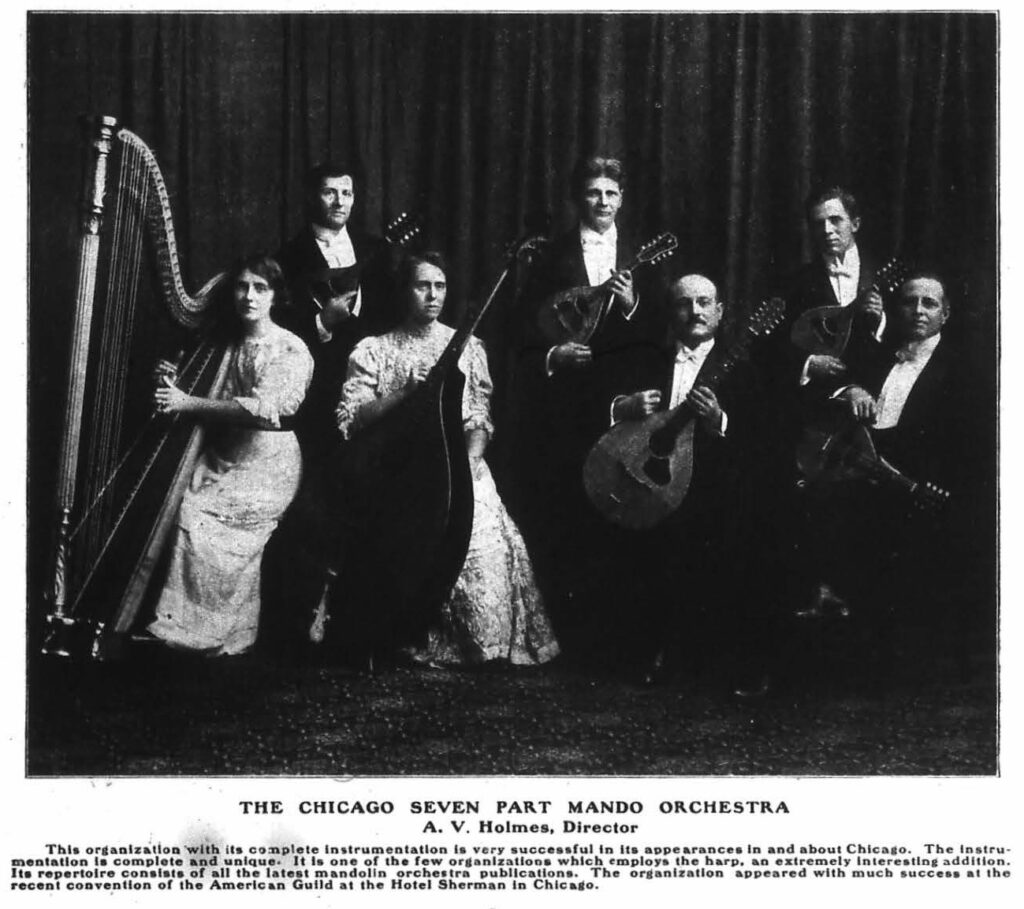
What is interesting is the photo that exists of that club seems to show a different bass, one much more closely resembling the less refined version of the Stahl bass. Note specifically the curve of the body as it approaches the neck.
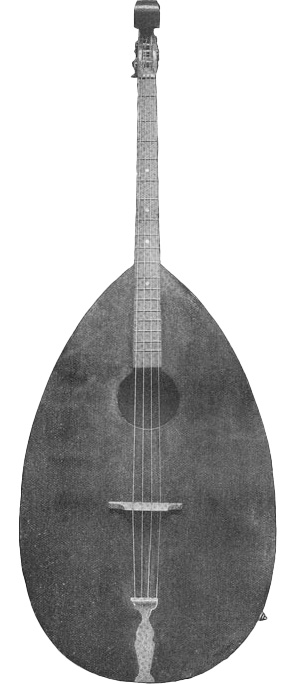
The Leland Bass Mando (No. 709) was particularly plain with no ornamentation. According to the catalog,
Specs
- Back and Sides of Finest Maple, Mahogany stained
- Top of best selected, seasoned Spruce
- Ebony Finger-Board
- German Silver Frets
- Handsomely finished throughout
- Side-pin
- 69″ Tall
Specifically marketed to Guitarists, and Double-Bassists, Leland stressed the ease with which those players could adapt to the Bass Mando.
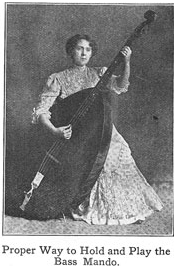
Also mirroring the early Gibson approach, the Leland catalog has a photograph of the “proper” way to play it.
The Bass Mando is only explicitly mentioned in two ads in 1912 and 1914. So far there is no evidence of any surviving examples.